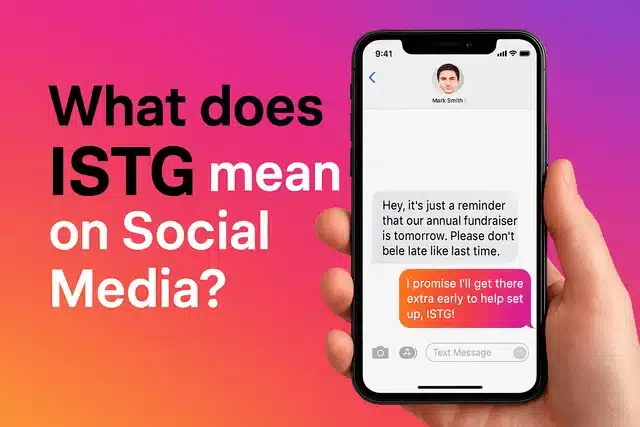
What Does ISTG Mean in Text? Everything You Need to Know About This Popular Texting Slang
If you have ever been scrolling through your messages or social media feed and stumbled across the acronym it, you are probably not alone in wondering what it means. Digital communication moves fast, and new shorthand expressions pop up almost daily. Understanding what ISTG mean in text can feel like decoding a secret language — but once you know it, you will recognize it everywhere.
Whether someone sent it to you in a heated debate, a funny story, or a moment of absolute disbelief, it carries a very specific emotional weight. It is one of those internet slang terms that feels small but says a lot. In this in-depth guide, we break down the meaning, origin, correct usage, tone, and everything else you need to know about ISTG in texting and online communication.
So, What Does ISTG Mean in Text?
ISTG stands for “I Swear To God.” It is an acronym used widely across text messages, social media platforms, gaming chats, and online forums. When someone types this, they are essentially emphasizing the truth or sincerity of whatever they are saying — or expressing a high level of frustration, disbelief, or exasperation.
To understand what ISTG mean in text at a deeper level, think of it as the digital equivalent of someone saying “I promise you” or “I am being completely serious right now.” It adds emotional intensity to a statement without requiring the person to write out a full sentence of explanation.
“ISTG, if this bus is late one more time, I am walking.” — A perfectly common example of how ISTG punctuates everyday frustration.
In casual digital conversations, where speed and brevity are prized, it fills the role of a verbal oath. It tells the reader: pay attention, because what follows — or what just happened — genuinely matters to me.
The Origins of ISTG: Where Did This Slang Come From?
Like most internet slang, the exact birthplace of ISTG is difficult to pin down. Slang acronyms tend to emerge organically from online communities before spreading to mainstream platforms. It likely gained momentum in early SMS texting culture during the 2000s, when character limits made abbreviations practical and almost necessary.
As platforms like Twitter, Tumblr, Instagram, and later TikTok and Discord became dominant spaces for youth communication, acronyms like It found new audiences. They moved from text messages into comment sections, captions, and live chat environments.
The phrase “I swear to God” itself is a deeply rooted expression in spoken English, often used to emphasize honesty or vent strong emotion. Condensing it into an acronym was a natural step in the evolution of digital language. Once you know what ISTG mean in text, you start to see how closely online slang mirrors the rhythms of real spoken conversation — just compressed.
How the slang Is Used in Everyday Texting?
It is remarkably versatile. Depending on the context and tone of the message, it can express sincerity, frustration, comedic exaggeration, or genuine emotional intensity. Here are the most common ways people use it in day-to-day texting and social media.
Expressing Frustration or Impatience
One of the most frequent uses of this is to signal that someone has reached the end of their patience. The person is not necessarily angry, but they want you to know they are not joking around.
Frustration
ISTG, if my WiFi drops one more time during this game I’m quitting.
Impatience
He texts back three days later like nothing happened. ISTG.
Emphasizing Honesty or Sincerity
Sometimes people use It not out of frustration, but to genuinely stress that something is true. It functions as a verbal guarantee, urging the other person to believe them without question.
Sincerity
ISTG this is the best pizza I’ve ever had in my life.
Reassurance
I’m not making this up — ISTG, it actually happened exactly like that.
Adding Comedic Exaggeration
In many online spaces, ISTG is used humorously to make something sound far more dramatic than it actually is. This is especially common among younger users on platforms like TikTok and Twitter, where hyperbole is a core part of the humor culture. Knowing what ISTG mean in text helps you recognize when someone is being genuinely serious versus playfully over-the-top.
Humor / Exaggeration
ISTG my cat is plotting my downfall. He knocked over my coffee again.
Dramatic flair
This line at the coffee shop is moving so slow. ISTG I’m aging.
ISTG vs. Similar Slang: Understanding the Differences
ISTG is not the only swear-based acronym in digital communication. Several related expressions serve similar purposes, but with subtle differences in tone and intensity. Understanding those differences helps you use — and interpret — online slang more accurately.
| Acronym | Stands For | Tone | Common Use |
|---|---|---|---|
| ISTG | I Swear To God | Serious / Emphatic | Frustration, honesty, exaggeration |
| IRL | In Real Life | Casual | Distinguishing online vs real contexts |
| NGL | Not Gonna Lie | Casual / Honest | Admitting something openly |
| IDC | I Don’t Care | Indifferent | Dismissiveness, detachment |
| OMFG | Oh My F***ing God | Intense / Shocking | Shock, disbelief, intensity |
ISTG sits in a unique middle space — more emotionally loaded than something like NGL, but not as explosive as OMFG. It signals that the speaker is drawing on a sense of personal honor or truth, which gives it a weightier feel than many other acronyms in the same category.
Is ISTG Appropriate for All Contexts? When to Think Twice
Now that you fully understand what ISTG mean in text, it is worth thinking about when it is appropriate to use — and when it might not be. The phrase “I swear to God” has religious connotations for many people, which means using ISTG can come across as irreverent or offensive depending on who is reading it.
In casual conversations with friends or peers, ISTG is completely normal and unremarkable. However, in professional settings — like a work Slack, an email to a client, or a message to a professor — ISTG would feel out of place at best, and disrespectful at worst. Context is everything in digital communication.
Additionally, some people who hold strong religious beliefs may find the casual use of “swearing to God” disrespectful. While It is typically used without any religious intent, it is always worth being mindful of your audience. The beauty of digital language is its adaptability — and knowing when not to use a term is just as important as knowing when it fits perfectly.
ISTG in Social Media, Gaming, and Pop Culture
Beyond personal text messages, It has become a fixture in online communities. On platforms like Twitter and TikTok, viral posts frequently use It to amplify reaction humor. A tweet that says “ISTG this is the most chaotic thing I’ve ever seen” before a funny video is a classic use case. It prepares the audience emotionally — you are about to experience something that genuinely surprised me.
In gaming communities on Discord or Twitch chat, ISTG is used constantly in moments of frustration — missed shots, lost rounds, unfair matchmaking. It is a way to vent without saying something more extreme, making it almost a tame safety valve in high-energy digital spaces.
Pop culture has also absorbed ISTG. Memes, reaction content, and even some mainstream media references have adopted the acronym as part of the broader internet vernacular. Understanding what ISTG mean in text is not just about one phrase — it is about being fluent in the language of modern digital culture.
How to Respond When Someone Sends You ISTG
Knowing how to respond when someone uses ISTG depends entirely on the context of what they have said. If they are frustrated, acknowledge their feelings — a simple “I totally get it” or “that’s genuinely annoying” goes a long way. If they are being funny and dramatic, lean into the humor with something equally playful.
If they are using ISTG to stress that something is true and they want you to believe them, the appropriate response is often just to affirm that you do believe them — or ask a follow-up question to show you are engaged. ISTG is often a signal that the person wants emotional validation, not a debate. Read the room (or the screen), and respond accordingly.
Quick Reference: ISTG at a Glance
| Attribute | Detail |
|---|---|
| Full form | I Swear To God |
| Type | Acronym / Internet slang |
| Primary emotion | Frustration, sincerity, exaggeration |
| Common platforms | SMS, Twitter, TikTok, Instagram, Discord |
| Appropriate context | Casual, informal conversations |
| Avoid in | Professional, formal, or religiously sensitive settings |
Conclusion: Why Knowing What ISTG Mean in Text Actually Matters
Language, whether spoken or typed, is constantly evolving. Slang like ISTG reflects how people communicate authentically in digital spaces — with emotion, humor, emphasis, and personality packed into just four letters. Once you understand what ISTG mean in text, you gain a small but meaningful window into the emotional subtext of modern conversations.
Whether someone is genuinely venting, telling a funny story, or trying to convince you of something important, ISTG is their way of saying: this matters to me, and I want you to feel that. And now that you know exactly what it means and how to use it, you are that much more fluent in the language of the internet.
So next time you see those four letters pop up in a message, you will know exactly how to read the room — even through a screen.
Frequently Asked Questions About ISTG
ISTG stands for “I Swear To God.” It is used in text messages and online chats to emphasize sincerity, express frustration, or add dramatic effect to a statement. It signals that the speaker wants the reader to take what they are saying seriously.
ISTG is generally not considered rude in casual digital communication. However, because it references God, it may be seen as irreverent or disrespectful by people with strong religious beliefs. It is best used with friends or in informal settings where such language is understood and accepted.
Absolutely. ISTG is frequently used for comedic exaggeration or sarcasm, especially on platforms like TikTok and Twitter. When someone says “ISTG my plant is judging me,” they are being playful and humorous, not genuinely swearing an oath. Context and tone are key to interpretation.
OMG (Oh My God) is typically an exclamation of surprise, excitement, or shock. ISTG (I Swear To God) is more of a declarative statement used to emphasize truth or vent emotion. While both reference God informally, ISTG carries more weight and intentionality than the more spontaneous OMG.
No — ISTG is firmly casual slang and is not appropriate for professional emails, work communications, formal writing, or academic settings. In those environments, it would come across as unprofessional or out of place. Stick to formal language when the context calls for it.

Helping brands improve search visibility through expert guest posting, blogger outreach, quality backlink acquisition, and white-hat off-page SEO strategies that deliver results.