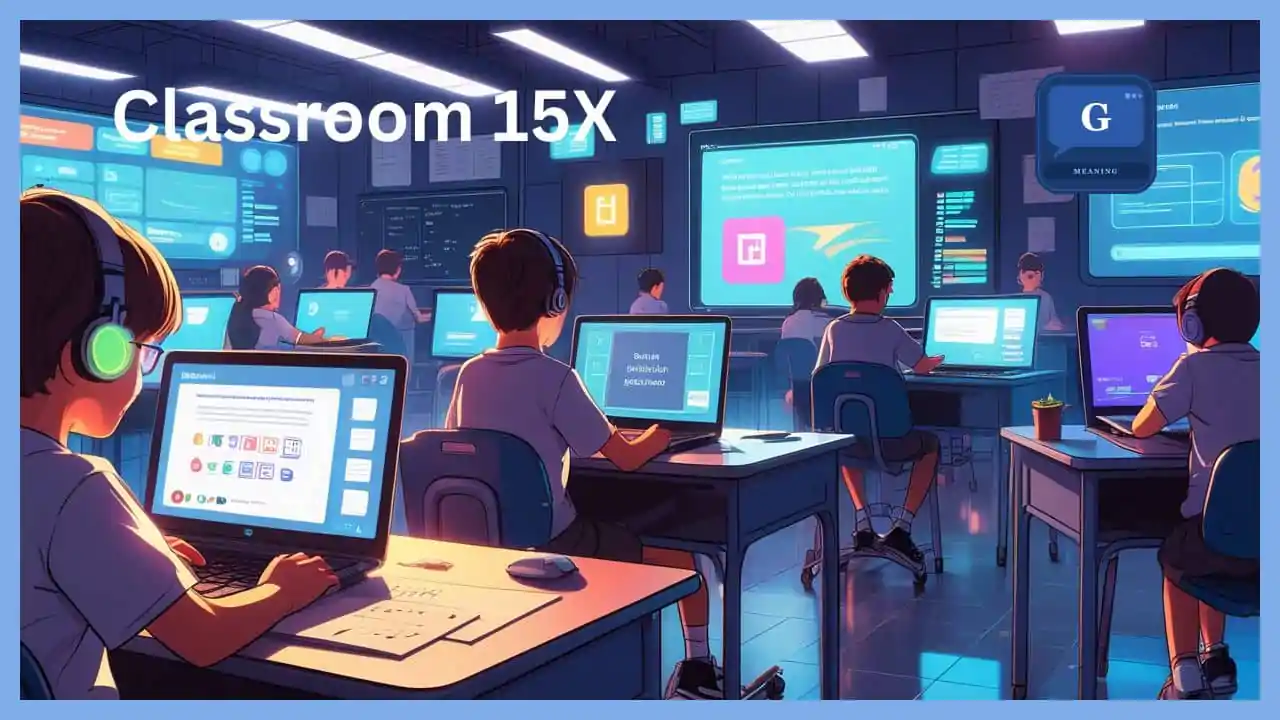
Classroom 15X: The Complete Guide to the Future of Learning and School Gaming
Introduction
Few terms in the current education conversation generate as much curiosity — or as much confusion — as Classroom 15X. Search for it online and you will find two surprisingly different but equally compelling conversations happening at once. One centers on a forward-looking educational model that promises to transform the traditional classroom experience through technology, flexible design, and personalized learning. The other revolves around a popular browser-based gaming platform that students across the world use to unwind during school breaks.
Both conversations are valid. Both are growing. And understanding what Classroom 15X actually means — in each of its contexts — matters enormously for students, parents, educators, and anyone who cares about how young people learn and spend their time in school environments.
This guide covers it all. Whether you are a teacher researching modern classroom design, a student looking for safe browser games during free periods, or a parent trying to understand what your child is talking about, this is the most complete, honest, and useful resource on Classroom 15X you will find.
Understanding the Dual Identity of Classroom 15X
The term Classroom 15X carries two distinct but related meanings in the digital education landscape, and recognizing both is the first step toward understanding why so many people are searching for it.
On one hand, Classroom 15X refers to an innovative educational model — a blueprint for redesigning physical and digital learning spaces to better serve today’s students. This version of the concept emphasizes small group sizes, adaptive technology, flexible furniture arrangements, and personalized learning paths driven by data and AI.
On the other hand, Classroom 15X is the name of a widely used online platform that provides students with free, unblocked, browser-based games that work on school networks. This is the version that most students encounter first, typically through a friend’s recommendation or a quick search for something fun to play during a free period.
Both identities share a common thread: they exist because the traditional one-size-fits-all model of education is no longer working for the modern student. Whether through redesigned classrooms or well-timed gaming breaks, Classroom 15X — in both its forms — represents an acknowledgment that student engagement, wellbeing, and learning outcomes are deeply connected.
Classroom 15X as an Educational Model: Reimagining How Schools Work
The Philosophy Behind the Name
The “15X” branding is not arbitrary. It signals transformative improvement — the idea that the right environment, combined with the right tools and teaching methods, can produce engagement, retention, and learning outcomes that are dramatically better than what a conventional classroom achieves. Think of it as the educational equivalent of a business concept that promises not just incremental gains but a fundamental shift in what is possible.
At its core, the Classroom 15X model merges three essential components into a unified learning environment. The first is an adaptable physical setup — portable desks, designated collaboration zones, group workstations, and quiet individual study areas that can be rearranged to suit different learning activities. The second is a robust digital infrastructure, including devices, educational software, AI-driven analytics tools, and instructor control panels that give teachers real-time insight into student progress. The third is purposeful teaching methodology — customized tasks, project-based learning, ongoing formative assessment, and elements of gamification that keep students motivated and connected to their work.
Together, these three components create something that feels less like a traditional classroom and more like a thoughtfully designed workshop — a space that adapts to the people inside it rather than requiring them to adapt to it.
Why Flexible Classroom Design Matters
The research on physical learning environments is compelling. According to a landmark study from the University of Salford, classroom design can account for as much as 25 percent of the variation in student learning progress over the course of a year. Factors like natural light, temperature, air quality, and spatial flexibility all contribute meaningfully to how well students absorb and retain information.
The Classroom 15X model takes these findings seriously. Rather than anchoring students to fixed rows of desks that face a teacher at the front of the room — a layout designed for an industrial age that no longer reflects how learning actually happens — this approach creates zones. There are spaces for collaboration, spaces for quiet focus, spaces for hands-on project work, and spaces for direct instruction. Students move between them based on the task at hand, which naturally increases their physical engagement and reduces the cognitive fatigue that comes from sitting in one position for hours.
Technology as a Learning Partner, Not a Distraction
In the Classroom 15X educational model, technology plays a central and purposeful role. Smart boards replace static whiteboards. AI-powered software tracks individual student progress and surfaces patterns that would take a human teacher weeks to identify. Tablets and laptops become tools for creation, research, and collaboration rather than passive consumption devices.
What makes this approach different from simply adding technology to a conventional classroom is the intentionality behind it. The platform uses AI and analytical insights to build personalized learning paths for individual students — meaning that a student who is struggling with fractions gets targeted practice and support, while a student who has mastered that concept moves forward rather than waiting for the rest of the class to catch up.
This kind of adaptive learning technology is supported by substantial evidence. Research published by the RAND Corporation on personalized learning approaches found that schools implementing these methods saw meaningful gains in math and reading achievement, particularly among students who had previously been underserved by conventional instruction.
Small Class Sizes and the Teacher’s Evolving Role
Another defining feature of the Classroom 15X model is its emphasis on smaller group sizes — ideally around 15 students or fewer. This is not simply about crowd control. It is about fundamentally changing the relationship between teacher and student.
In a class of 30, a teacher can deliver instruction to the group but struggles to meaningfully differentiate support for individual learners. In a group of 15, that same teacher can identify who is confused, who is ready to move on, and who needs a completely different approach — and then actually act on that information in real time.
The teacher’s role in a Classroom 15X environment shifts from lecturer to learning coach. They walk the room, ask probing questions, facilitate collaboration, and use the data surfaced by the platform’s analytics to guide their decisions. This is a fundamentally more engaged and more effective form of teaching, and it produces students who feel seen, supported, and genuinely invested in their own progress.
Classroom 15X as a Gaming Platform: What Students Need to Know

What the Platform Actually Offers
Shifting from the educational model to the gaming platform, Classroom 15X is a dedicated hub that offers free unblocked games specifically optimized for school environments, built on Google Sites infrastructure. Whether you are using a Chromebook, a school-issued laptop, or a tablet, the platform ensures smooth, instant access to games without requiring downloads, logins, or VPNs.
The platform hosts a large collection of browser-based games spanning multiple categories — puzzle games, action titles, racing games, strategy games, and classic arcade experiences. Students simply visit the site, choose a game, and start playing within seconds. There is no software to install, no account to create, and no subscription to manage. This friction-free access is a significant part of why the platform has grown so quickly in popularity among school-age users.
Why School Networks Block Most Gaming Sites
To understand why Classroom 15X fills a genuine gap, it helps to understand the problem it solves. Most school networks implement web filtering systems that block entertainment and gaming websites. These filters are put in place with reasonable intentions — to keep students focused during class time and to prevent exposure to inappropriate content.
The challenge is that these filters are blunt instruments. They often block broad categories of websites rather than making fine-grained distinctions between, say, a violent shooter game and a gentle puzzle game that develops spatial reasoning. The result is that students who want a low-stakes, genuinely harmless gaming break during lunch or free periods find themselves completely locked out of the kinds of lightweight entertainment that would help them decompress and return to class with better focus.
Classroom 15X addresses this directly. Because it is built on Google Sites infrastructure and designed to work within school network parameters, it bypasses the restrictions that block most gaming sites while maintaining the kind of safe, lightweight experience that is appropriate for school environments.
The Cognitive Case for Gaming Breaks
It is tempting to view school gaming platforms purely as distractions to be managed, but the science tells a more nuanced story. Research from the American Psychological Association has found that gaming — particularly puzzle, strategy, and problem-solving games — can improve attention, spatial reasoning, decision-making, and cognitive flexibility.
More broadly, the concept of cognitive rest is well-established in educational psychology. Students who take genuine mental breaks between periods of focused work demonstrate better retention, better performance on subsequent tasks, and lower levels of test-related anxiety than those who attempt to maintain continuous focus without relief. A well-timed, time-limited gaming session is not the enemy of learning — it can actually be one of its enablers.
The key phrase is “well-timed and time-limited.” Classroom 15X, used responsibly — during actual free periods, lunch breaks, or transition times rather than during instructional time — functions as exactly the kind of cognitive reset that research supports.
Game Categories Available on Classroom 15X
The diversity of games available on the Classroom 15X platform is one of its genuine strengths. Puzzle games challenge players to think spatially and logically, developing problem-solving skills in an engaging format. Strategy games require players to plan ahead, allocate limited resources, and adapt to changing conditions — skills that transfer directly to academic and professional contexts. Racing and action games build reflexes, hand-eye coordination, and the ability to make rapid decisions under pressure. Classic arcade games offer the satisfaction of mastery through repetition, which research links to persistence and resilience in learning contexts.
This variety means that students with different interests and learning styles can all find something worthwhile on the platform, rather than being served a single type of experience regardless of their preferences.
How Educators and Parents Can Think About Classroom 15X
A Tool, Not a Replacement
Whether you are considering the educational model or the gaming platform, the most important framing for Classroom 15X is as a tool rather than a replacement. The educational model is not a magic formula that eliminates the need for skilled teachers, thoughtful curriculum design, or adequate school funding. The gaming platform is not a substitute for structured learning or supervised recreation.
What both versions of Classroom 15X offer is a complement to existing educational practice — an additional resource that, used thoughtfully, can improve outcomes and wellbeing for students.
Dedicated educational gaming platforms like Prodigy, Kahoot, or Khan Academy offer structured learning paths with teacher controls and progress analytics. Classroom 15X occupies a different and equally legitimate space — closer to the digital equivalent of a school playground, where unstructured play develops real skills in a lower-stakes environment.
Setting Boundaries Around Screen Time
For parents, understanding what Classroom 15X is forms the foundation for having productive conversations with children about screen time, boundaries, and the difference between productive and unproductive use of digital tools. The platform itself is safe and free of inappropriate content, which is a genuine starting point.
The American Academy of Pediatrics recommends consistent media boundaries for school-age children, with emphasis on balancing screen time with physical activity, in-person social interaction, and sleep. Using platforms like Classroom 15X within agreed-upon time limits — as a defined break rather than an open-ended activity — respects these recommendations while acknowledging that some digital recreation is a normal and healthy part of modern childhood.
The Future of Classroom 15X and What It Means for Education
The growing interest in both versions of Classroom 15X reflects something larger: a widespread recognition that education systems built for a different era are struggling to serve today’s students. Students are more digitally native, more cognitively diverse, and more aware of their own learning needs than any previous generation. The tools and environments we build for them need to reflect that reality.
The Classroom 15X educational model points toward classrooms that are genuinely flexible, data-informed, and human-centered. The gaming platform points toward an acknowledgment that student wellbeing — including the need for genuine, enjoyable rest — is not separate from academic achievement but deeply intertwined with it.
As educational technology continues to evolve and as the evidence base for both personalized learning and cognitive breaks grows stronger, Classroom 15X — in both of its forms — is likely to become an increasingly familiar part of the educational conversation.
Conclusion
At first glance, Classroom 15X might seem like a simple gaming website or a buzzwordy education concept. Look closer, and you find something considerably more interesting: a window into the ways that students, educators, and technology developers are actively rethinking what school can look like and feel like.
Whether you encounter Classroom 15X through a student’s enthusiasm for a new game they found during lunch or through a professional development session on modern classroom design, the core message is the same. Learning works best when environments are flexible, technology is purposeful, students feel supported as individuals, and their wellbeing is treated as a genuine educational priority rather than an afterthought.
Classroom 15X, in all its forms, is part of that conversation. And it is a conversation worth having.
Frequently Asked Questions
Classroom 15X refers to two distinct but related things. The first is an innovative educational model that redesigns physical and digital learning spaces to support personalized, flexible, technology-enhanced learning — typically in small class sizes of around 15 students. The second is a free, browser-based gaming platform that provides students with access to unblocked games on school networks without requiring downloads, accounts, or VPNs. Both are real, both are growing in use, and both reflect broader shifts in how students engage with learning and technology in school environments.
The Classroom 15X gaming platform is designed specifically for school environments, which means its game library is curated to avoid violent, inappropriate, or harmful content. The platform runs in a web browser without requiring personal information, account registration, or any software downloads, which significantly reduces privacy and security risks. That said, parents and educators should always review any platform their students use and establish clear boundaries around when and how long it is used. As with any digital tool, responsible, time-limited use within appropriate contexts is the key to a positive experience.
Classroom 15X is built on Google Sites infrastructure, which is typically whitelisted by school network filters because Google’s services are widely used for educational purposes. This means the platform can pass through the same filtering systems that block conventional gaming websites. The platform is also designed to be lightweight and to avoid the kinds of content flags — ads, tracking scripts, inappropriate imagery — that typically trigger school network filters. This intentional design is a core part of what makes the platform appealing and accessible to students on school-issued devices.
The Classroom 15X educational model benefits teachers in several meaningful ways. The flexible classroom design allows teachers to organize students into different configurations — small groups, pairs, individual study — depending on the activity, rather than being locked into a single frontal instruction format. AI-powered analytics tools surface real-time data on student progress, helping teachers identify who needs support and who is ready to advance without having to manually assess every student individually. The shift toward smaller class sizes of around 15 students means teachers can build stronger, more individualized relationships with each learner. Together, these features reduce teacher workload in some areas while significantly increasing the quality and impact of the support they can provide.
The research on gaming and cognition supports a nuanced answer. Many games available on the Classroom 15X platform — particularly puzzle, strategy, and problem-solving titles — actively develop skills that are directly relevant to academic performance, including spatial reasoning, logical thinking, decision-making, and cognitive flexibility. Beyond specific skill development, the principle of cognitive rest is well-supported in educational psychology: students who take genuine mental breaks between focused work periods demonstrate better retention and performance than those who attempt to maintain continuous focus without relief. Classroom 15X, used during actual free time rather than instructional time, can function as a legitimate cognitive reset that supports rather than undermines learning outcomes.

Helping brands improve search visibility through expert guest posting, blogger outreach, quality backlink acquisition, and white-hat off-page SEO strategies that deliver results.