What Does SMS Mean in Texting? Everything You Need to Know
Introduction
Every day, billions of people pick up their phones, open a conversation, and send a short message without giving the underlying technology a second thought. But if you have ever paused and wondered — what does SMS mean exactly? — you are not alone. It is one of those abbreviations that has quietly shaped the entire fabric of modern communication, yet few people know its full story.
Understanding what SMS mean goes far beyond a simple dictionary definition. It is a window into how humanity cracked the code of instant, universal communication long before smartphones, social apps, or the internet became household staples. From its humble engineering origins to its continued dominance in a world of WhatsApp and iMessage, SMS carries a fascinating legacy that still influences how we communicate today.
In this guide, we will break down everything — the acronym, the history, the technology, the limitations, and what the future holds for SMS. Whether you are a casual texter or a tech enthusiast, this is the complete answer to a question more people are searching than you might expect.
What Does SMS Mean? Breaking Down the Acronym
SMS stands for Short Message Service. Each word in that phrase carries weight. “Short” refers to the strict character limit that defined early text messaging — originally capped at 160 characters per message. “Message” is straightforward: a piece of written communication. And “Service” points to the fact that this is a standardized protocol built into the cellular network infrastructure, not a standalone app or platform.
So when someone asks what does SMS mean in texting, the most accurate answer is: it is the standardized technical system that powers the simple text messages sent between mobile phones using the cellular network. No internet connection required, no third-party app, just the carrier network doing its job quietly in the background.
It is worth noting that SMS mean something subtly different depending on context. In everyday conversation, people use “SMS,” “text,” and “message” interchangeably. But in technical and telecommunications circles, SMS is a precise standard — one that differs from MMS (Multimedia Messaging Service, which supports images and video) and from OTT (Over-The-Top) messaging apps like WhatsApp or Telegram that run over the internet.
Quick Definition: SMS = Short Message Service. A standardized communication protocol used by cellular networks to transmit text messages of up to 160 characters between mobile devices — no internet connection required.
The Surprising History Behind SMS
The story of SMS mean is older than most people realize. The concept was first proposed in 1982 as part of the development of the GSM (Global System for Mobile Communications) standard in Europe. Engineers at the time were designing protocols for the next generation of mobile networks, and SMS was initially conceived as a minor add-on — a way to send simple service notifications to users.
The first actual SMS was sent on December 3, 1992, by British engineer Neil Papworth. Working on a computer (since mobile phones at the time lacked keyboards), he typed the message “Merry Christmas” and sent it to Vodafone executive Richard Jarvis. That 15-character message quietly launched a revolution that would touch nearly every person on Earth within two decades.
What makes the origin of SMS mean especially remarkable is how accidental its popularity was. Telecommunications companies initially viewed SMS as a niche administrative tool. They could not have predicted that ordinary people — especially teenagers — would embrace text messaging as a primary form of daily communication. By the early 2000s, SMS had become a global cultural phenomenon, reshaping language, social norms, and even business models.
“The engineers who built SMS gave the world a 160-character window — and humanity filled it with everything from ‘I love you’ to breaking news.”
The 160-Character Rule: Where Did It Come From?
The famous 160-character limit that defines what SMS mean in practice was not arbitrary. German engineer Friedhelm Hillebrand proposed it in 1985 after analyzing hundreds of postcards and telex messages. He found that the vast majority of meaningful short communications fit comfortably within 160 characters. That insight became the architectural backbone of an entire global messaging standard.
Hillebrand’s hypothesis proved astonishingly correct. The constraint that once seemed like a limitation turned into a creative catalyst — giving birth to abbreviations, acronyms, and eventually an entirely new dialect of written communication that linguists still study today.
Key Stats: 23 billion SMS messages are sent globally every single day. The original character limit per message was 160. The first SMS was sent in 1992.
How SMS Actually Works Under the Hood
To truly understand what SMS mean, it helps to grasp the elegant simplicity of how it functions. Unlike a phone call — which requires an open, continuous channel between two parties — SMS uses a method called store-and-forward messaging. When you send a text, it travels from your phone to your carrier’s Short Message Service Center (SMSC), which stores it temporarily and then forwards it to the recipient’s carrier and ultimately to their device.
This is why SMS mean reliable delivery even in conditions where a voice call might fail. If the recipient’s phone is switched off or out of coverage, the SMSC holds the message and delivers it once the device reconnects. That resilience has made SMS the backbone of critical communications — from emergency alerts to two-factor authentication codes sent by banks and governments worldwide.
SMS travels through the signaling channel of a cellular network — a separate lane of the network originally designed for control data, not voice. This is why SMS mean a very low cost and high efficiency for carriers, and why it became so universally available. Every mobile phone, on any carrier, in virtually any country, can send and receive an SMS. No special setup, no account, no app download required.
SMS vs. MMS vs. Internet Messaging: What Is the Difference?
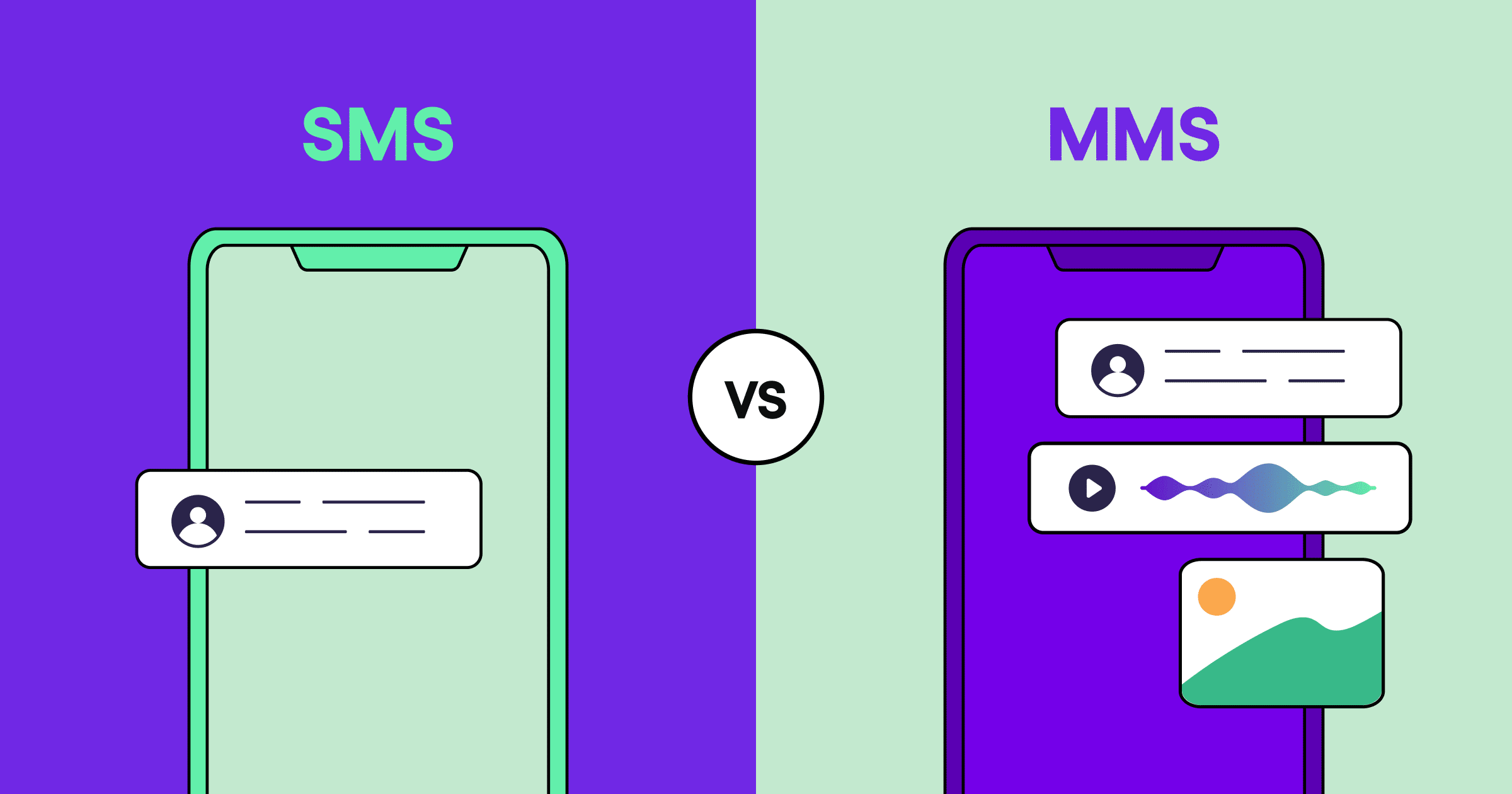
Many people wonder how SMS mean differs from other forms of mobile messaging. The distinction is clearer than you might think. SMS is pure text, delivered over the cellular signaling network, with a 160-character limit per segment. MMS — Multimedia Messaging Service — is the natural evolution that allows images, audio, video, and longer text. It uses the cellular data network rather than the signaling channel.
Internet-based messaging apps like WhatsApp, iMessage, Telegram, or Signal operate over Wi-Fi or mobile data using internet protocols. They offer richer features — read receipts, group chats, end-to-end encryption, file sharing — but require an internet connection and a compatible app on both ends. SMS, by contrast, is universally interoperable. That is a distinction that still matters enormously in global markets where internet connectivity is inconsistent.
SMS and Its Extraordinary Cultural Impact
Few technologies have left fingerprints on human culture quite like SMS. The moment that SMS mean widespread adoption in the late 1990s and early 2000s, a new form of written language emerged practically overnight. Abbreviations like “lol,” “brb,” “omg,” and “u” (in place of “you”) were born from the practical need to say more within 160 characters. Linguists have described this as one of the most rapid and spontaneous evolutions of written language in recorded history.
SMS also democratized communication in ways that continue to resonate. In developing nations across Africa, Southeast Asia, and South Asia, SMS mean access to financial services, healthcare information, and civic participation for hundreds of millions of people who had basic mobile phones but no smartphones. Mobile banking platforms like M-Pesa in Kenya were built on SMS infrastructure, transforming economic participation for entire communities.
Political movements have also harnessed SMS to powerful effect. Flash mobs, protest coordination, and even election campaigns have been organized and amplified through text messaging. The simplicity and universality of SMS mean that it cuts through the fragmentation of competing apps and platforms — everyone, everywhere, with any phone, can receive a text.
SMS in Business: Still Irreplaceable
If you have ever received a one-time password (OTP) from your bank, a delivery update from a courier, or a doctor’s appointment reminder, you have witnessed why businesses still consider SMS mean essential infrastructure. SMS boasts an average open rate of over 90%, far outperforming email’s typical 20–25%. Messages are usually read within three minutes of receipt.
For businesses, this makes SMS an unmatched tool for time-sensitive communications. No algorithm decides whether an SMS reaches you. No spam filter intercepts it. No app needs to be installed. The message lands directly in the universal inbox that every mobile phone user already has. That directness — that reliability — is exactly what SMS mean in the context of modern commerce and customer communication.
Is SMS Still Relevant in 2026?
With WhatsApp counting over two billion active users and iMessage deeply embedded in the Apple ecosystem, it would be reasonable to ask whether SMS mean anything in the modern landscape. The answer is a resounding yes — for reasons that are both practical and structural.
First, SMS requires no internet. In rural areas, during natural disasters, or in regions with unreliable data infrastructure, SMS mean the only reliable channel of communication. Emergency management agencies in countries around the world rely on SMS-based alert systems precisely because they work when data networks are overwhelmed or down.
Second, SMS is universal. You cannot assume everyone has WhatsApp. You cannot guarantee an Android user and an iPhone user are using the same messaging app. But you can always send an SMS. This universality is why two-factor authentication, healthcare notifications, and government communications continue to be SMS-first or SMS-only.
Third, the rise of RCS (Rich Communication Services) — sometimes called “SMS 2.0” — is breathing new life into the standard. RCS offers features similar to WhatsApp (read receipts, typing indicators, high-quality media sharing) but through the native messaging infrastructure of carriers. As RCS adoption grows, the gap between SMS and internet messaging apps is narrowing, ensuring that what SMS mean continues to evolve.
Did You Know? Approximately 5 billion people worldwide can send and receive SMS messages — more than the number of people who use any single internet-based messaging app, making SMS the most widely accessible digital communication tool ever created.
Common Misconceptions About What SMS Mean
Even though SMS has been part of everyday life for over three decades, a surprising number of misconceptions persist. One of the most common is that “SMS” and “texting” are completely synonymous. While texting broadly refers to any form of written mobile messaging, SMS is specifically the cellular-network-based protocol. When you send a message through WhatsApp, you are texting — but you are not sending an SMS.
Another widespread misunderstanding is that SMS mean a free service. In many modern smartphone plans, SMS is bundled into unlimited packages, which makes it feel free. But in earlier eras — and still in some prepaid markets — carriers charged per message. The economics of SMS were, for a time, extraordinarily profitable for telecoms, which is part of why internet messaging apps gained such enthusiastic adoption when smartphones made them accessible.
People also sometimes assume that SMS mean a secure communication channel. It is not — at least not by default. SMS messages are transmitted through carrier infrastructure without end-to-end encryption, meaning they can theoretically be intercepted or accessed by carriers and, in some jurisdictions, by government authorities. For sensitive communications, encrypted messaging apps remain the more secure alternative.
The Future of SMS: What Comes Next?
The evolution of what SMS mean is not over. Rich Communication Services (RCS) represents the most significant upgrade to the standard since its inception. In 2023, Apple announced support for RCS on iPhones, a landmark shift that had been anticipated for years. With both Android and iOS now supporting RCS, the long-fragmented mobile messaging landscape is moving toward a richer, more unified standard that preserves the universality of SMS while closing the feature gap with apps like WhatsApp.
Beyond RCS, SMS mean a foundational role in the Internet of Things (IoT). Machine-to-machine SMS communication allows smart devices, vehicles, industrial sensors, and agricultural monitors to send alerts and status updates over cellular networks without internet connectivity. As the IoT ecosystem expands, SMS infrastructure becomes more — not less — critical to global connectivity.
Artificial intelligence is also reshaping how SMS mean operates in business contexts. AI-powered SMS chatbots now handle customer service queries, appointment booking, and transactional communications entirely through text, offering businesses a scalable and universally accessible interface with their customers.
Conclusion: Why Understanding SMS Mean Still Matters
So — what does SMS mean? On the surface, it is three simple words: Short Message Service. But beneath that definition lies one of the most consequential communication technologies in human history. SMS created a new language, connected billions, powered industries, and quietly underpins the digital infrastructure of daily life in ways most people never see.
Understanding what SMS mean gives you a clearer picture of how your phone works, why certain communications always seem to get through, and why businesses and governments keep returning to this decades-old standard in an era of sleek, feature-rich apps. The genius of SMS is not complexity — it is resilience, universality, and elegant simplicity.
As communication technology continues to evolve, SMS will evolve with it. The protocol has already outlived predictions of its death more than once. With RCS integration, IoT applications, and its unmatched global reach, what SMS mean for the next decade looks just as significant as what it has meant for the last three. The humble text message, it turns out, is anything but humble.
Frequently Asked Questions
Q1: What does SMS mean in simple terms?
SMS stands for Short Message Service. In simple terms, it is the standard protocol that lets mobile phones send and receive plain text messages through cellular networks — no internet connection needed. When you send a “text message,” you are most likely using SMS. It was designed to carry short communications of up to 160 characters, and it remains one of the most widely used communication tools on the planet.
Q2: Is SMS the same as a regular text message?
In everyday conversation, SMS and “text message” are used interchangeably, and that is perfectly fine. Technically speaking, SMS refers specifically to the cellular-network protocol for plain text. “Texting” is a broader term that can also include internet-based messages sent through apps like WhatsApp or iMessage. So every SMS is a text message, but not every text message is technically an SMS.
Q3: What is the difference between SMS and MMS?
SMS (Short Message Service) carries plain text only, up to 160 characters per message. MMS (Multimedia Messaging Service) is the upgraded version that allows you to send images, videos, audio files, and longer text messages. MMS uses the cellular data network rather than the signaling channel that SMS relies on. When you send a photo to someone using your phone’s default messaging app, you are typically sending an MMS, not an SMS.
Q4: Why do businesses still use SMS instead of messaging apps?
Businesses favor SMS for several powerful reasons. SMS has an average open rate above 90%, far higher than email. It requires no app installation — it reaches any mobile phone on any carrier anywhere in the world. Messages are typically read within three minutes. For time-sensitive communications like one-time passwords, appointment reminders, delivery alerts, and emergency notifications, no channel matches SMS for reliability and immediacy.
Q5: Is SMS secure and private?
Standard SMS messages are not end-to-end encrypted, which means they pass through carrier infrastructure and could theoretically be accessed by telecom providers or, in some cases, government authorities with legal authority. For sensitive communications, encrypted messaging apps such as Signal or WhatsApp offer stronger privacy protections. However, for general everyday communication and non-sensitive information, SMS remains a perfectly adequate and convenient choice used by billions of people daily.
What does OFC mean in texting?

Helping brands improve search visibility through expert guest posting, blogger outreach, quality backlink acquisition, and white-hat off-page SEO strategies that deliver results.