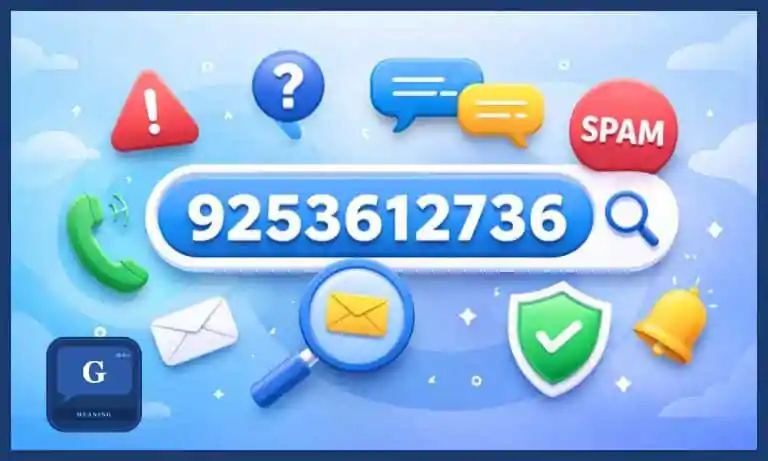
9253612736: Who Is Calling and Is It Safe?
You glanced at your phone and saw an unfamiliar number — 9253612736. Maybe it rang twice and stopped. Maybe it left no voicemail. Maybe it’s called more than once and you still have no idea who’s on the other end. Whatever the situation, you’re here because you want answers, and that’s a completely reasonable thing to want in a world where unknown calls have become one of the most common — and most frustrating — parts of daily life.
This guide covers everything you need to know about 9253612736: where it originates geographically, what the different types of calls from numbers like this usually turn out to be, how to verify the caller’s identity safely, and what steps to take if the call turns out to be unwanted or harmful. By the end, you’ll have a clear, informed picture of how to handle this situation with confidence.
Where Does 9253612736 Come From?
The first thing worth understanding about 9253612736 is its geographic context. Written in the standard US format, this number is (925) 361-2736. The area code — 925 — tells you something meaningful about where this call may have originated.
The 925 area code was established in 1998 when the older 510 area code serving the San Francisco Bay Area became too congested and needed to be divided. The 925 area code now covers the eastern portion of the Bay Area in Northern California, primarily serving Contra Costa County and parts of eastern Alameda County. Cities within this area code include Concord, Walnut Creek, Pleasanton, Livermore, San Ramon, Antioch, and Dublin — a mix of suburban and semi-rural communities situated inland from the coast.
So on the surface, a call from 9253612736 appears to originate from a legitimate California number in a well-established region. However — and this is a critical point — the visible area code does not guarantee that the caller is actually in that location. A technology called caller ID spoofing, which we’ll discuss in detail shortly, makes it entirely possible for a caller anywhere in the world to make their number appear as a local US number, including one with a 925 area code.
Is 9253612736 Linked to a Known Business or Organization?
This is the question most people searching this number want answered directly. Based on publicly available information, there is no official company, government agency, or verified organization that has publicly claimed 9253612736 as a registered business line. No authoritative public record currently connects this specific number to a named entity.
That lack of a clear public record doesn’t automatically mean the number is malicious — many legitimate small businesses, private individuals, healthcare providers, and local service companies operate phone lines that don’t appear in widely searchable databases. But it does mean that if you received a call from 9253612736 and are trying to verify who was calling, you will need to do some additional investigation before drawing a firm conclusion.
Why Would You Receive a Call From This Number?
Understanding the landscape of unsolicited and unfamiliar phone calls helps put any specific number — including 9253612736 — into proper context. The reasons someone might receive a call from an unknown number like this generally fall into a few broad categories.
Legitimate Calls You Weren’t Expecting
Not every unrecognized number represents a threat. Legitimate callers who might appear as an unknown number include medical offices or clinics calling about appointments, local service providers following up on a request, financial institutions using a different outgoing line than their main number, government agencies such as the IRS or Social Security Administration for official business, and individuals calling from personal or work lines you simply don’t have saved.
In these cases, the caller will typically leave a clear voicemail identifying themselves and providing a callback number or reference. If you received a call from 9253612736 and there was a professional voicemail with a clear identity and purpose, it is likely a routine legitimate call.
Telemarketing and Robocalls
Telemarketing remains one of the most common sources of calls from unfamiliar numbers. These calls may be attempting to sell products or services, collect donations for organizations, conduct surveys, or pitch political messaging. While the legal framework around telemarketing calls — governed in the United States by the Telephone Consumer Protection Act (TCPA) and enforced by the Federal Trade Commission (FTC) — requires compliance with the National Do Not Call Registry, violations are widespread.
Robocalls, which are automated calls using pre-recorded messages, represent a particularly high volume of unwanted call activity. According to data from the FTC, Americans report hundreds of millions of robocalls each year, and the technology that enables them is cheap enough that even low-budget scam operations can deploy it at scale.
Caller ID Spoofing and Phone Scams
This is where the stakes become genuinely serious. Caller ID spoofing is the practice of deliberately falsifying the information displayed on a recipient’s caller ID to make an incoming call appear to come from a different, often trusted source. Scammers use spoofing to make their calls appear local — using area codes like 925 — or to impersonate well-known institutions like banks, the IRS, Medicare, or tech companies like Microsoft and Apple.
If 9253612736 is being used as part of a spoofing operation, the real caller may be located anywhere in the world, and the number itself may change frequently as each spoofed number gets reported and blocked. Common scam scenarios involving spoofed local numbers include impersonation of government agencies demanding immediate payment, fake tech support calls warning of virus infections, prize scam calls claiming you have won a lottery, and debt collection impersonation targeting financially vulnerable individuals.
The Federal Communications Commission (FCC) has detailed guidance on caller ID spoofing and maintains active enforcement programs against it. Awareness of how spoofing works is your first line of defense.
What to Do If You Received a Call From 9253612736
Whether you answered the call or are deciding whether to call back, a few practical steps will help you handle the situation safely and intelligently.
Do Not Call Back Immediately
Calling back an unknown number without any additional information is a risk. If the call was part of a scam operation, simply calling back can confirm to the operator that your number is active — making you a target for future calls. If the number was spoofed, calling it back may connect you to someone entirely different from whoever originally called you.
Check the Number Using a Reverse Lookup Tool
Several reputable reverse phone lookup services allow you to search a number and see whether it has been reported by other users as spam, a scam, or a telemarketer. Tools like the FTC’s complaint database, RoboKiller’s lookup service, and community-driven platforms like CallerSmart aggregate reports from users who have received calls from specific numbers and allow others to benefit from that shared experience.
Searching 9253612736 through one of these services may reveal whether other people have reported the same number, what kind of calls they described, and whether any pattern of suspicious activity is associated with it.
Listen to Any Voicemail Carefully
If 9253612736 left a voicemail, the content of that voicemail is your best immediate source of information. Legitimate callers will identify themselves clearly, provide a reason for calling, and offer a verifiable callback option. Red flags in a voicemail include urgent or threatening language about debts, legal action, or account suspension — demands for immediate payment via unusual methods such as gift cards or wire transfers — and requests for personal identifying information like your Social Security number or bank account details.
If a voicemail from this number contains any of these elements, treat it as a potential scam and do not engage with the caller.
Block the Number If Necessary
If you’ve determined that a call from 9253612736 is unwanted — whether it’s a telemarketer, a robocall, or a potential scam — blocking the number directly on your phone is a straightforward step. Most modern smartphones allow number blocking through the native phone app in just a few taps. Third-party apps like Hiya, Nomorobo, and RoboKiller can also provide proactive blocking based on databases of known spam numbers, and many major US carriers offer free or low-cost spam call filtering as part of their service packages.
How to Protect Yourself From Unknown Number Calls
The experience of receiving a call from a number like 9253612736 is an opportunity to take stock of your broader phone security habits. A few consistent practices can significantly reduce both the frequency of unwanted calls and the risk of being harmed by a deceptive one.
Register With the National Do Not Call Registry
The FTC’s National Do Not Call Registry (donotcall.gov) allows US residents to register their phone numbers to reduce telemarketing calls. While it doesn’t eliminate all unwanted calls — scammers routinely ignore it — it does reduce the volume of calls from legitimate telemarketers who are required to honor registrations.
Be Cautious With Your Phone Number Online
Many people unknowingly expose their phone numbers on websites, social media profiles, online contest entries, and app registrations that sell or share contact data with third parties. Being selective about where and how you provide your phone number reduces the chances of it ending up in telemarketing or data broker lists.
Never Share Personal or Financial Information With an Incoming Caller
Regardless of what an incoming caller claims — whether they say they’re from your bank, the IRS, your internet provider, or a tech support service — legitimate organizations do not call you and then request sensitive personal or financial information on that same call. If a caller from 9253612736 or any unknown number asks for your Social Security number, bank account details, passwords, or payment via gift card, hang up immediately and report the number to the FTC at ReportFraud.ftc.gov.
Use Your Carrier’s Built-In Spam Protection
All four major US carriers — AT&T, Verizon, T-Mobile, and Spectrum — offer some form of spam and scam call filtering. AT&T’s ActiveArmor, Verizon’s Call Filter, and T-Mobile’s Scam Shield are free baseline services that identify and label likely spam calls before you answer them. Activating these services takes only a few minutes and provides an additional layer of protection against numbers like 9253612736 being used for unwanted contact.
What the Rise of Unknown Calls Tells Us
The broader context around calls from numbers like 9253612736 reflects a genuine and growing problem in the American communications landscape. Phone scam losses in the United States run into billions of dollars annually, and the technology enabling both legitimate and fraudulent calling has become sophisticated enough that simple caller ID information is no longer a reliable guide to whether a call is trustworthy.
The right response to this environment is not paranoia — most phone calls are still exactly what they appear to be — but informed caution. Taking a moment to verify an unknown number before calling back, listening critically to voicemails, and knowing the warning signs of common phone scams gives you a significant practical advantage.
Conclusion
Receiving a call from 9253612736 doesn’t need to leave you feeling anxious or helpless. The number originates from the 925 area code in California’s eastern Bay Area, but as with any unfamiliar number, its geographic origin doesn’t tell the whole story. Whether the call turns out to be a routine legitimate contact, a telemarketer, or something requiring more caution, the steps outlined in this guide — checking the number through a reverse lookup tool, listening critically to any voicemail, avoiding sharing personal information with unverified callers, and blocking or reporting the number if needed — put you firmly in control of the situation.
If 9253612736 called you and you’re still not sure what to make of it, trust your instincts, use the verification tools available to you, and when in doubt, don’t call back until you have more information. Protecting your personal information and your peace of mind is always worth a few extra minutes of due diligence.
Frequently Asked Questions
Q1: What is 9253612736?
It is a phone number with the 925 area code, which covers the eastern San Francisco Bay Area in Northern California, including cities like Concord, Walnut Creek, and Livermore. No verified public record currently identifies this number as belonging to a specific named business or organization.
Q2: Is 9253612736 a scam number?
It cannot be confirmed as a scam number without verified user reports. If the call was suspicious — such as asking for personal information or making urgent financial demands — treat it with caution and check it on a reverse lookup tool like the FTC’s complaint database.
Q3: Should I call back 9253612736?
Only call back if you have additional information confirming the caller’s identity, such as a clear, professional voicemail. Calling back an unknown number without context can confirm your number is active to potential scammers, increasing future call volume.
Q4: How do I block 9253612736?
You can block the number directly through your phone’s native call blocking feature, or use third-party apps like Hiya, Nomorobo, or RoboKiller. Most major US carriers also offer free spam call filtering services that can help.
Q5: How do I report 9253612736 if it’s a scam?
You can report unwanted or suspicious calls to the Federal Trade Commission at ReportFraud.ftc.gov, or to the FCC at fcc.gov/consumers/guides/filing-informal-complaint. Reporting helps authorities track scam patterns and protects other potential targets.

Helping brands improve search visibility through expert guest posting, blogger outreach, quality backlink acquisition, and white-hat off-page SEO strategies that deliver results.